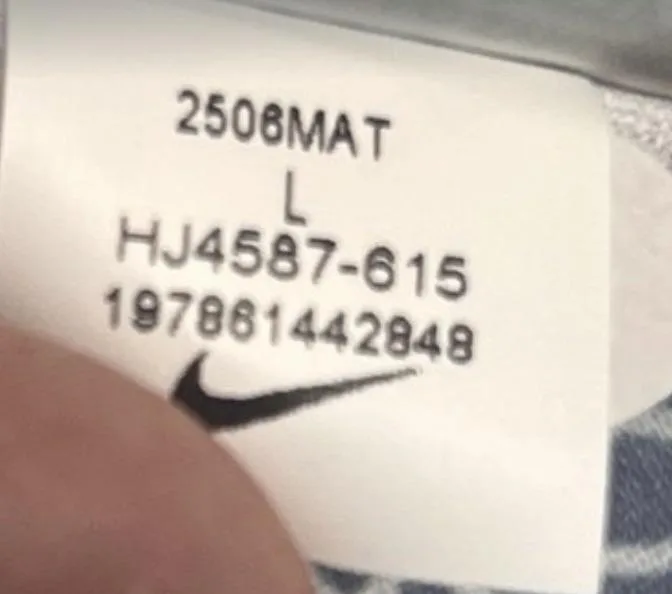
You know that moment when you're scrolling through a second-hand listing and the product code on the tag just looks... off? Like it's missing half the info you'd normally expect. Yeah, that happened to me recently with an Atletico Madrid 25/26 shirt. The code was "2506MAT" instead of the usual long string of numbers and letters. Cue the paranoia.
What's the Deal With Product Codes on Football Shirts?
First off, if you're new to this rabbit hole: most modern football shirts have a product code on the inner tag. It usually tells you the season, the manufacturer, sometimes the month of production. For example, Adidas often uses a format like "HJ4587-615" where the first part is a style number and the second is a colour code. Nike has its own system. Puma another. You get the idea.
But sometimes you see a shorter code, like "2506MAT". That's not necessarily fake. I've seen it on legit shirts too. The thing is, not all codes are created equal. Some are for retail, some are for player issue, some are for specific markets. And some are just... weird.
So Why the Different Codes?
A few reasons. One: different production runs. If a shirt is restocked, the code might change slightly. Two: regional variations. A shirt sold in Asia might have a different code than one sold in Europe. Three: player issue vs. replica. Player issues often have different tagging altogether. Four: some codes are just internal manufacturer codes that don't follow the public pattern.
But here's the kicker: if you see a code that looks nothing like the standard for that brand, it's worth digging deeper. Especially on second-hand platforms where fakes run rampant.
How to Spot a Fake (Without Losing Your Mind)
I'm not an expert, but I've bought enough shirts to know the red flags. First, check the code against the official product page if you can. If it doesn't match, ask the seller for more photos. Look at the tag stitching, the font, the placement. Fakes often get the small details wrong.
Second, if the price is too good to be true, it probably is. I saw a "player issue" shirt for £30 once. Yeah, right.
Third, trust your gut. If something feels off, it probably is. I once bought a shirt that looked perfect in photos but arrived with a code that didn't match anything online. Turned out to be a decent fake. Lesson learned.
But Wait, Some Weird Codes Are Real
Here's where it gets tricky. I've seen shirts with codes like "2506MAT" on legit jerseys. Sometimes it's a sample, sometimes it's a prototype, sometimes it's just a different production line. The point is, a weird code alone doesn't mean fake. You need to look at the whole picture.
I remember a thread where someone posted a shirt with a code that looked like a phone number. Everyone screamed "fake!" but then a few collectors chimed in saying they'd seen the same code on shirts bought directly from the club store. So yeah, don't jump to conclusions.
What About Those "Manufactured at Temu" Jokes?
Okay, I laughed at that comment. But seriously, Temu and other cheap sites have made it harder to tell. Some of their shirts are surprisingly decent fakes. But the codes are usually the giveaway. If the code looks like it was generated by a random number generator, be suspicious.
That said, I've seen real shirts with codes that look just as random. So it's not a perfect science.
My Advice? Do Your Homework
If you're buying second-hand, ask for the code. Google it. Check forums. Ask in collector groups. Most people are happy to help. And if the seller gets defensive or refuses to provide more info, walk away.
At the end of the day, collecting shirts is supposed to be fun. Don't let the paranoia ruin it. But also don't get ripped off.
So next time you see a weird code, don't panic. It might be legit. Or it might be from Temu. Only one way to find out.
Bottom line: If you're not sure, ask. The collector community is usually pretty good about helping each other out. And if someone tries to sell you a "player issue" shirt for £20, run.
From the LISIMKE shop
Kits that fit this story
 US$32.99 • LISIMKELionel Messi Argentina Home Jersey 26/27 – Sky Blue – Long Sleeve Authentic
 US$32.99 • LISIMKELionel Messi Argentina Away Jersey 26/27 – Navy – Long Sleeve Authentic
 US$27.99 • LISIMKEAtletico Madrid Away Jersey 26/27 – Yellow & BlackUS$32.99 • LISIMKEAtletico Madrid Away Jersey 26/27 – Yellow & Black – Kids Kit Set
 US$32.99 • LISIMKEAtletico De Madrid Home Jersey 26/27 – Red – Kids
Why does my football shirt have a short product code like '2506MAT'?
Short codes can be legitimate. They might indicate a specific production run, a regional variation, or even a sample. Not all manufacturers use the same format, and some codes are internal. If the shirt otherwise looks and feels right, it's probably fine.
Are all football shirts with unusual codes fake?
No. Some legitimate shirts have unusual codes due to different production lines or regional differences. However, a strange code combined with other red flags (poor stitching, wrong fonts, too-good-to-be-true price) should make you suspicious.
How can I check if a football shirt is authentic?
Compare the product code with official sources if possible. Check the quality of the tag, stitching, and overall finish. Ask for more photos if buying online. Trust your gut—if something feels off, it might be.
What does the product code on a football shirt actually mean?
It typically includes information about the season, manufacturer, and sometimes the production month or colourway. The exact format varies by brand. For example, Adidas often uses a style number followed by a colour code.
Should I avoid buying football shirts with short product codes?
Not necessarily. Short codes can be legitimate. Do your research, ask the seller for more details, and compare with known authentic examples. If you're still unsure, it's okay to walk away.